
Mediators, turn a tangled dispute into something everyone can work with
Give yourself and the parties a shared visual map of the dispute.
Break complex positions into smaller points. Make relationships visible. Filter out what is not relevant right now. And make common ground visible.
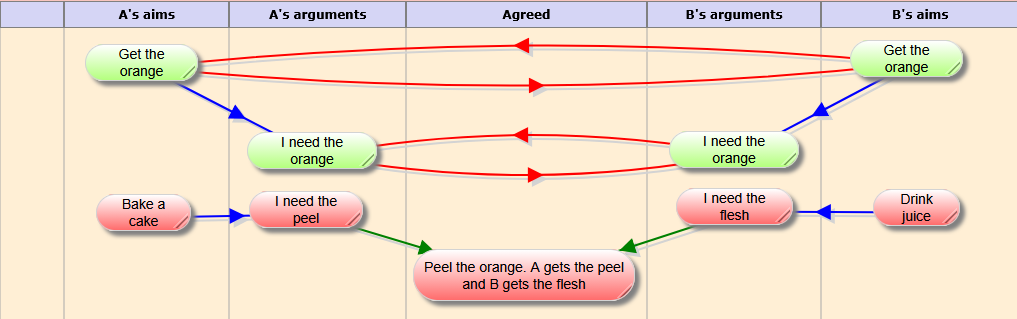
Use it with your next mediation and see whether it helps you make the structure of the dispute easier to understand.
A video showing what SortYourThoughts can do
Thus far, low production quality. Sorry.
Mediation becomes easier when everyone can see the structure of the dispute.
Mediation can involve dozens of aims, interests, arguments, facts and possible solutions. Some are connected, some conflict, and some turn out to be less important as the conversation develops.
SortYourThoughts gives the mediator and the parties a shared picture that can evolve with the conversation.
SortYourThoughts can help all sorts of mediators regardless of their field or the subject matter. It simply visualises what people are thinking and saying.
From a dispute to a shared map
Watch a dispute become clearer
The map develops as the parties explain themselves.
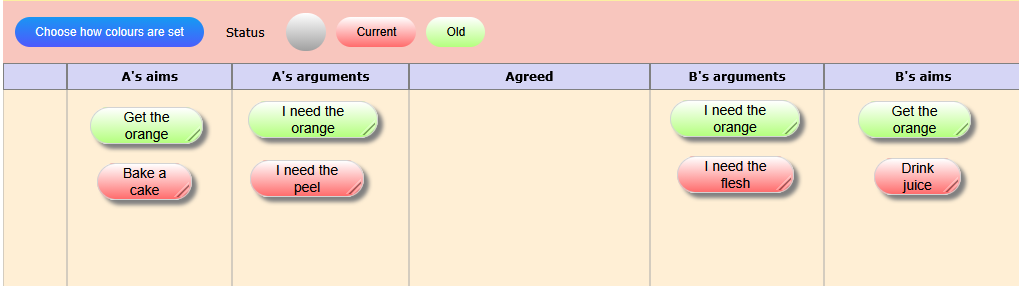
Imagine a mediation between A and B. You might begin with five columns.
Each rectangle represents one point in the discussion.
-
Start with what the parties want.
Capture their aims and interests so that everyone can see what each party is trying to achieve.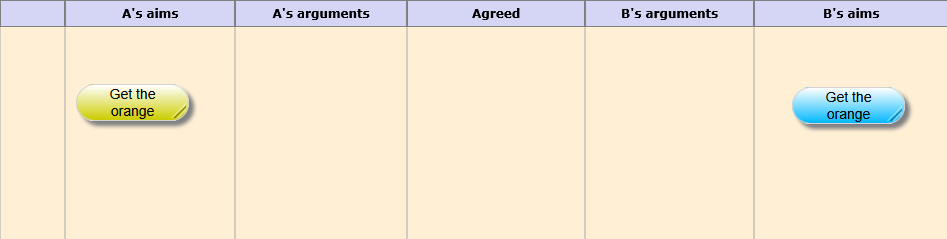
-
Add their arguments and standpoints.
The map begins to show not just what the parties want, but why they say they want it.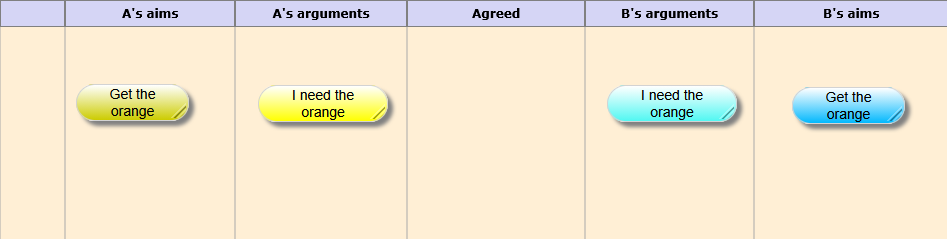
-
Clarify and split the issues.
An apparently indivisible position can be edited or divided into several smaller points.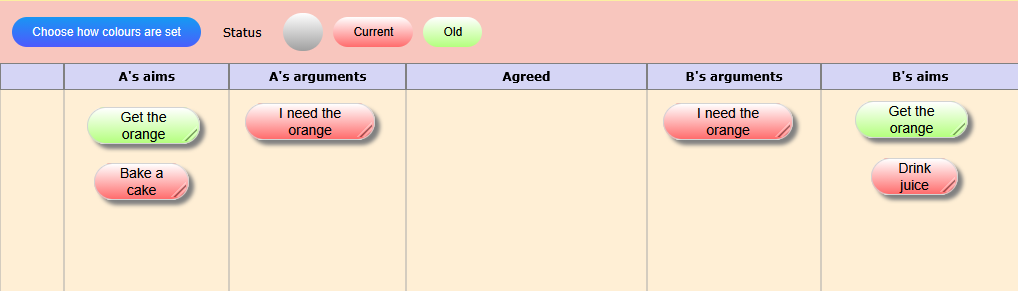
-
And more specific arguments emerge.
-
Remove what is no longer relevant.
The map develops as everybody's understanding of the dispute develops.
-
Find the points on which agreement is possible.
Individual points can move into the Agreed column as the parties make progress.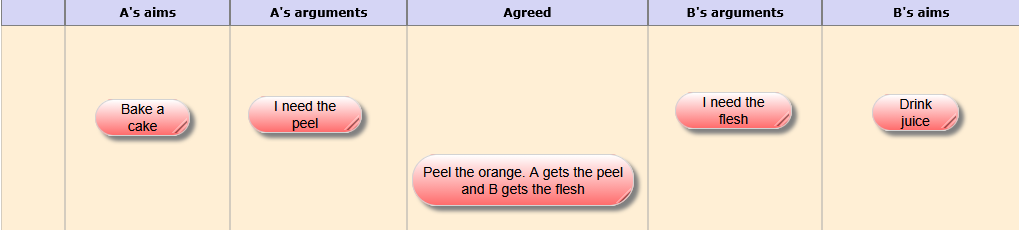
-
Relationships between items can also be made explicit. For example, connections can indicate agreement, disagreement or another kind of relationship.
The map is no longer just a record of what people have said. It becomes a representation of how the different points relate to one another.
If you need to link to documents, graphics or websites, each item can contain a hyperlink:
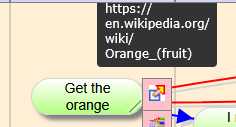
No fruits - citric or otherwise - were harmed during the making of this webpage.
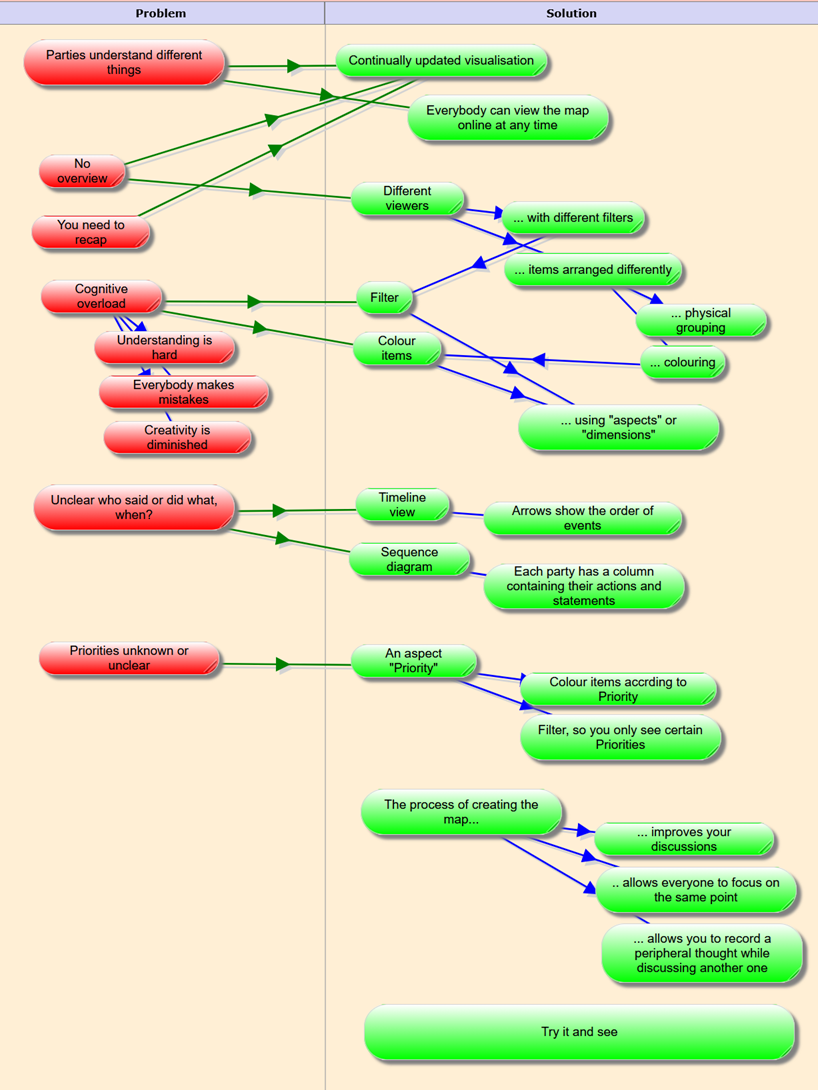
Which problems can SortYourThoughts solve for you?
One conversation. One shared picture.
The mediator is not the only person who can work with the map.
So, everyone sees the same evolving representation of the mediation.
He or she can allow all participating parties to add, edit, move and develop the information.
“This is where we are now.”
The map becomes a shared reference point for the conversation.
What SortYourThoughts gives you as a mediator
See the whole dispute
Keep aims, interests, arguments, facts and options together without losing the ability to focus on one aspect at a time.
Unpack positions
Break apparently indivisible positions into smaller points that may be easier to explore and agree upon.
Expose common ground
Make agreements visible instead of allowing them to disappear into the conversation.
Keep everyone aligned
Mediator and parties work from the same evolving representation of the dispute.
Change the view as the mediation changes
Filter, reorganise and refine the information without throwing away what you have already captured.
Continue where you left off
Your map is automatically saved, so you can return to it in your next session.
Always have a complete representation visible
No need to recap in your next session.
Fewer misunderstandings along the lines of "but I said... and you said...".
See what matters now — without losing what you already know
Complex disputes contain more information than is useful to consider at any one moment.
SortYourThoughts lets you assign your own aspects, or dimensions, to the items in the map.
Here are some examples:
| Aspect | Example values |
|---|---|
| Who | A, B, both, third party |
| Status | To do, Working, Agreed |
| Priority | High, medium, low |
| Type | Aim, interest, argument, fact, option |
You can then filter the map according to the question you are exploring.
- Show only B's arguments.
- Show only unresolved issues.
- Show only high-priority points.
- Show only facts.
- Show the points that have already been agreed.
- Combine any of these criteria, e.g. high-priority unresolved issues.
Or you can colour the items depending on their values of these aspects.
Why not just use a whiteboard?
A whiteboard is excellent for putting information in front of people.
But during a complex mediation, you may want to:
- visually reorganise the information;
- hide irrelevant issues without deleting them;
- see only one party's arguments;
- focus on unresolved or high-priority points;
- split an argument into smaller points;
- show relationships between arguments;
- let everyone work on the map together;
- return to the same map in a later session.
SortYourThoughts offers the functionality of a whiteboard. Just start collecting arguments etc. in a map.
You can add aspects, columns, colours and filters later - in different Viewers.
When you invite somebody to share a map, you can decide whether they may edit the map or just view it.
If you allow them to edit it, they may do so whenever they want, not just during your discussions.
So they don't forget thoughts they have at any time, night or day.
And others will see their changes and may respond.
The next time you all meet, you discuss what has changed in the map. Progress is tangible and visible.
So that is how SortYourThoughts goes beyond a conventional whiteboard.
Don't lose the work between sessions
The map is automatically saved whenever it changes.
So you can return to the same map in a later session instead of reconstructing the discussion from handwritten notes or photographs of a whiteboard.
Of course, you can print the map when you need a to.
A choice of subscriptions
- Trial plan: Experiment for free, creating 3 maps containing up to 42 items and 3 aspects.
- No credit card required.
- You can invite other trial users to work on small maps with you. You type and edit at the same time and immediately see what the other has done.
- A Standard plan costs EUR 5.99 per month. You have unlimited maps, items and aspects.
- You can share your screen during a video chat.
- And you can invite others to register and share your map. You decide whether they can only view it, or also edit it.
- They can register for the Trial plan and have limited access to your map for free, or get a Standard plan themselves.
- The Team plan for professional groups allows you to invite up to 20 parties to
participate in your maps.
- They must log in to SortYourThoughts using your invitation, but don't need to pay for an account.
- For EUR 150 per month you manage your maps and invitees, determining who can see the maps and who can edit them.
All prices include German sales tax (USt) where applicable.
SortYourThoughts works with your mediation method
It doesn't prescribe a particular mediation methodology.
You decide:
- which information to capture;
- which aspects to define;
- how to structure the map;
- which information to show;
- and how to use the map in the conversation.
Whether you work in family, workplace, commercial or another form of mediation, you can structure the map according to the needs of the particular case.
The software adapts to your mediation — not the other way around.
Try it with your next mediation
You don't need to redesign your mediation practice to use SortYourThoughts.
Create a map for one case. Start with the parties' aims and positions. Let the map develop as the conversation develops.
See whether visualising the structure of the dispute really helps you and the parties to achieve better outcomes.
From “What are we arguing about?” to “What can we agree on?”
That is the central idea behind using SortYourThoughts in mediation.
The goal is not to make the dispute look simpler than it is.
The goal is to make its complexity understandable enough that you and the parties can work with it.
Book a consultation
If you are unsure whether this is the right product for you, send an email to info [ät] SortYourThoughts.com to arrange a consultation. Let's Zoom for 30 minutes to discuss what you need and how you can profit from SortYourThoughts.
We are in Germany, so please take that into account when suggesting a date and time.
It's always interesting to hear what our potential users are thinking, and what you need - so, please don't hesitate! We look forward to talking to you... in English or German.
And sign up for our newsletter to hear about new features and offers.